

§ Flagship Course · Cohort 01

AI Microdrama Production Course

Storytelling, commercial strategy & technical AI creation for 9:16 vertical video.

Next Cohort
September 1
Format
Zoom + Live Meetups
Structure
10+ Modules
See the syllabus

Information about course registration and payment will be sent to you via email.

§01 - Course Concept

A complete system for the 9:16 era.

This course teaches creators, marketers, founders, agencies, and brand teams how to create AI-powered microdramas designed for social media, commercial campaigns, and branded entertainment.

Students will learn how to develop short-form vertical drama series in the 9:16 format, build addictive hooks, write cliffhangers, create consistent AI characters, generate cinematic images and videos, use AI voices, edit episodes, and integrate brands naturally into the story.

The course combines storytelling, marketing psychology, AI production tools, and commercial strategy.

§02 - Course Promise

What you'll walk away with.

By the end of the course, students will know how to create a complete AI microdrama concept from scratch, including:

A commercial story concept
A 9:16 vertical episode structure
A strong opening hook
Recurring characters
A branded world
AI-generated visuals
AI video scenes
Voiceover or dialogue
Captions and music
A repeatable production workflow
A launch strategy for TikTok, Instagram Reels, YouTube Shorts, and paid ads
§03 - Who This Course Is For

Built for creators, marketers, and brand builders.

Content creators
Marketing agencies
Brand managers
AI video creators
Screenwriters
Founders
Social media managers
Influencers
Production companies
Advertisers
Entrepreneurs who want to use storytelling to sell

No traditional film background is required.

§04 - Core Idea

Microdrama is not just short video.

It is serialized emotional storytelling built for mobile attention.

Every episode must do three things fast:

  1. 01 Stop the scroll
  2. 02 Create emotional tension
  3. 03 Make the viewer need the next episode

In commercial microdrama, the brand is not an interruption. The brand becomes part of the world, the conflict, the status, the desire, or the transformation.

§05 - Format Rules

9:16. Mobile. Mercilessly tight.

Video Format
9:16 vertical
15–60 seconds per episode
Designed for mobile viewing
Fast emotional entry
Clear visual world
Minimal exposition
Strong captions
One core conflict per episode
End with a question, reveal, reversal, or cliffhanger
Episode Length
Best range: 30–60 seconds
Pilot episode: 15–45 seconds
Ad teaser: 10–20 seconds
Microdrama episode: 45–75 seconds if story requires it
§ Reference Work - AI Videos & Microdrama Series

Watch what you'll learn to make.

Real episodes, trailers, and AI-generated video produced by the studio - the same tools, formats, and storytelling systems taught inside the course.

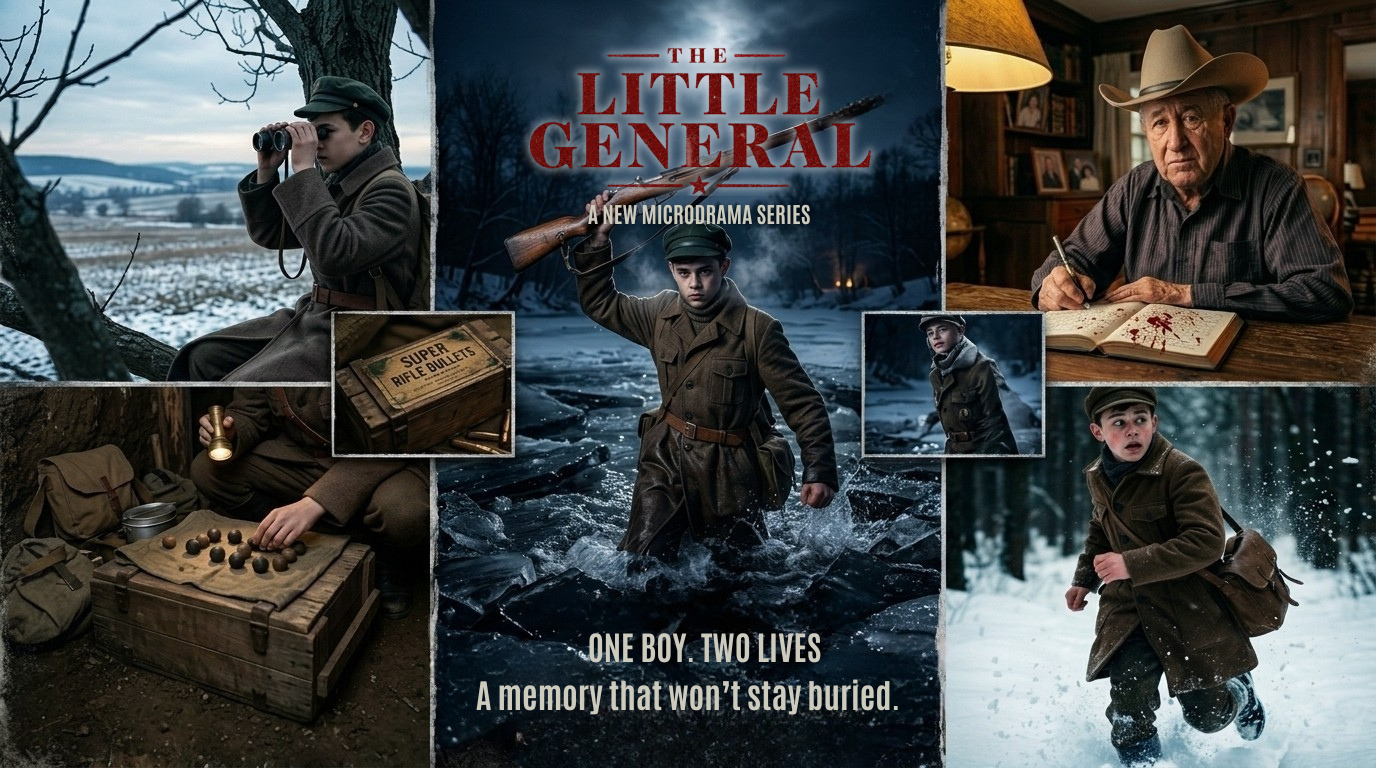
Microdrama Series
Sample Episodes
9:16 · HE
Gap - Ep. 10
9:16 · HE
Gap - Ep. 11
9:16 · Trailer
Chess Trailer
9:16 · Sample
Vertical Drama
en
§06 - The Syllabus

Ten modules. One finished pilot episode.

Module 01

What Is AI Microdrama?

Lesson topics
· What microdrama is
· Why vertical drama works
· Why audiences binge short episodes
· How TikTok, Reels, and Shorts changed storytelling
· The difference between content, ads, and serialized drama
· Why brands need story instead of just promotion

Microdrama works because it creates instant emotional investment. The viewer does not need to know everything - they only need to care about one question: "What happens next?"

Exercise
Choose one brand or product and answer: Who wants something? What is standing in their way? What secret, mistake, or desire creates tension? Why would someone watch the next episode?

Module 02

Commercial Storytelling for Brands

Lesson topics
· How to turn a brand into a story world
· How to show a product without making it feel like an ad
· How to create emotional reasons to care
· How to use status, romance, rivalry, family, ambition, fear, and humor
· How to build brand memory through repetition
· How to use microdrama for product placement
Brand as location
A luxury gym, hotel, club, clinic, restaurant, office, airport lounge.
Brand as object
A phone, bag, drink, app, beauty product, car, clothing item.
Brand as solution
The product helps solve a problem inside the story.
Brand as status
The character's relationship to the brand shows wealth, taste, aspiration, confidence, or belonging.
Brand as conflict
Two rivals want access to the same club, account, event, job, or opportunity.
Brand as transformation
Before and after, but shown through character and emotion.
Rule Do not stop the story to explain the brand. Let the brand live inside the scene.
Module 03

The 9:16 Vertical Story Structure

Lesson topics
· How vertical framing changes storytelling
· Close-ups vs wide shots
· How to stage scenes for phone screens
· Why faces matter
· Why text overlays matter
· How to create strong thumbnails
· How to make scenes readable without sound
0–3 seconds
Hook. A shocking line, visual, question, mistake, betrayal, secret, or unexpected entrance.
3–15 seconds
Context. Who is involved? Where are we? What is the emotional situation?
15–40 seconds
Escalation. Tension gets worse - someone reveals, hides, or decides.
Final 5 seconds
Cliffhanger. A reveal, interruption, message, look, confession, arrival, or unanswered question.
Module 04

Hooks That Stop the Scroll

Lesson topics
· What makes a hook work
· Visual hooks vs dialogue hooks
· How to start in the middle of the problem
· How to remove boring setup
· How to use curiosity gaps
· How to make a first line addictive
Confession
"I wasn't supposed to be here tonight."
Accusation
"You lied to me."
Status
"I was told this club needed a new queen."
Danger
"If he sees me, this is over."
Mistake
"I kissed the wrong Lior."
Secret
"She doesn't know I own the company."
Interruption
"Don't answer that call."
Message
A phone notification appears: "I know what you did."
Reversal
The assistant walks in - and everyone suddenly stands up.
Rule Start as late as possible. Enter the scene when the emotional problem has already begun.
Module 05

Cliffhangers and Binge Structure

Lesson topics
· Why cliffhangers create retention
· How to end episodes without resolving tension
· How to create the "next episode need"
· How to build daily viewing habits
· How to write episode chains
The arrival
Someone walks in who should not be there.
The message
A text appears that changes everything.
The reveal
A character sees something they were not supposed to see.
The betrayal
Someone trusted is working against the hero.
The decision
A character must choose right now.
The interruption
Before the truth is spoken, something stops them.
The identity twist
The person we thought was powerless is actually powerful.
The romantic cliffhanger
Someone says the wrong name or sees the wrong person.
The commercial cliffhanger
The product or place becomes central to the next emotional decision.
Rule Do not end with information. End with tension.
Module 06

Character Creation for AI Microdrama

Lesson topics
· How to design memorable characters
· How to create character sheets
· How to keep AI characters visually consistent
· How to define wardrobe, hair, age, energy, and emotional role
· How to create characters brands want to be associated with
Character sheet
Name · Age · Role · Visual description · Wardrobe · Personality · Secret · Desire · Fear · Relationships · Brand relationship · Signature behavior · Emotional arc
Example - Maya
New employee at a luxury fitness club. Desire: prove she belongs. Fear: being exposed as inexperienced. Secret: she knows the investor everyone is trying to impress. The gym is where her transformation begins. She smiles when nervous, then says something sharp.
Module 07

Writing the Pilot Episode

Lesson topics
· How to introduce the world fast
· How to introduce the hero
· How to create tension in under one minute
· How to include the brand naturally
· How to end with a strong cliffhanger
Pilot formula
Open with a problem · Introduce the main character through action · Show the branded world visually · Create an emotional misunderstanding · Reveal a second layer · End before the audience gets closure.
Pilot template
Title · Episode 1 · 45–60 sec · 9:16 vertical · Opening visual hook · Opening line · Scene · Conflict · Brand integration · Escalation · Cliffhanger.
Module 08

AI Image Creation

Lesson topics
· How to create character reference images
· How to generate cinematic stills
· How to prompt for 9:16 vertical frames
· How to maintain style consistency
· How to create branded environments
· How to create shot lists for AI image generation
Technical elements
Aspect ratio 9:16 · cinematic / natural / luxury / moody lighting · close-up, medium, wide · eye-level, low, POV · face / hair / wardrobe / age consistency · branded signage, packaging, props.
Prompt structure
Subject · Action · Location · Emotion · Wardrobe · Brand detail · Lighting · Camera angle · Style · Aspect ratio.
Example prompt
Cinematic 9:16 vertical image of a confident woman entering a luxury chess club in Dubai, elegant black evening gown, guests playing chess around her, warm speakeasy lighting, luxury hotel atmosphere, dramatic eye contact, branded club logo visible in the background, photorealistic, premium TV drama look.
Module 09

AI Video Generation

Lesson topics
· How to turn still images into moving scenes
· How to create short video shots
· How to control motion
· How to avoid visual glitches
· How to plan shots for AI video tools
· How to use movement without losing character consistency
Workflow
Generate the still · Choose the strongest frame · Write a motion prompt · Keep movement simple · Generate 3–5 variations · Pick the most stable · Edit only the best seconds · Add dialogue, captions, music, sound design.
Best movements
Slow push-in · Character turns head · Phone notification close-up · Door opens · Someone walks into frame · Over-the-shoulder · Emotional close-up · Car arrives · Group turns to look · Hand reaches for object.
Avoid
Too many people moving at once · Complicated fight scenes · Long walking sequences · Fast camera movement · Complex hand actions · Too much dialogue inside generated video · Tiny logos or unreadable text inside AI video.
Module 10

Voice, Dialogue and Performance

Lesson topics
· How to write dialogue for microdrama
· How to create natural short lines
· How to use AI voice tools
· How to direct voice actors or AI voices
· How to create emotion with pacing
· How to use silence and reaction shots
Dialogue rules
Short lines · Clear emotion · Subtext over explanation · One idea per line · No long speeches · Let characters interrupt · Use names sparingly · Every line either reveals character, increases tension, or moves the story.
Weak line
"I am upset because I feel you betrayed me and I do not understand why you came here."
Stronger
"You said you'd never come here."
Even stronger
"You promised me you'd stay away."
§07 - Teaching Philosophy

AI as a production partner, not a shortcut.

The course teaches students how to use AI as a production partner, not as a shortcut. The focus is on learning how to make creative decisions:

What is the hook?
Why should the audience care?
Where is the emotional tension?
How does the brand belong inside the story?
What makes the viewer watch the next episode?
What makes the content commercially useful?
The future of advertising is not interruption.
The future of advertising is story.
Yael Tamar
§08 - Instructor

Yael Tamar

Founder of microdra.ma. Strategist, producer, and storyteller working at the intersection of AI, commerce, and serialized fiction.

Guest faculty includes directors, screenwriters, editors, and AI specialists from the studio's production network.

Questions? Email yael@yaeltamar.com
§09 - Cohort 01 · September 1

Build the story brands will pay for.

Live online sessions on Zoom with optional in-person meetups. Recordings included. Information about course registration and payment will be sent to you via email.